Panel Planning & Advice
Need to plan what to put on your panel? Not sure what to put in? Not sure where to put it all? How do you do it?
On this page we will cover some tips and advice to assist you in what goes where and how to do it, to make things easier down the track.
Scroll down for advice on;
Antennas - Antenna Choices, Ground Planes and Coax Cables.
General Wiring - Wire Marking, Circuit Diagrams, Wire Selection, Looming, Terminating, Protection, Standards.
ANTENNAS
Any radio installation is ultimately as good as the coax cable, the antenna and the antenna installation. Here are some points to consider when choosing an antenna and coax.
Antenna Choices
You can find air band antennas from as little as $60.00. These are a simple stainless steel rod which needs to be tuned upon installation. This is done with a SWR (Standing Wave Ratio) meter. The problem with these is that they can only be effectively tuned for a particular frequency and the further you move away from that frequency, the poorer the performance. For example, if you have a local frequency at your airfield of 118.00Mhz, this will be a fine choice provided you remain local. If you travel cross-country and need to communicate on a CTAF freq of 126.70Mhz or another airfield with a frequency up in the top end of the range, the performance of your "stick" will be very poor.
Tuned range antennas made by companies such as Comant and DM are specifically made to perform well over the entire airband frequency range. They also are plug and play in that they do not need to be tuned with a SWR Meter. The penalty of course is the price which starts around $250 - $300.
If you just fly your bird round the sock on a sunday after church :-) then you can get away with the cheapo, but the benefits of the purpose made antenna far out way the liability. Just ask the poor person trying to understand your scratchy transmissions.
PK Aviation recommends that wherever possible the installation of a tuned range antenna is best. Antenna choices can be viewed at www.edmoap.com.au and purchased through PK Aviation.
Ground Planes
Bolting your new antenna to your fibreglass cowl may not give the best performance as most antennas need a relective (conductive) ground plane. A simple aluminium double plate underneath the composit and out of sight, will maitain your smooth lines and antenna performance.
So you have the slick antenna and a metal aeroplane, but still poor performance. Is your antenna bolted to the metal aeroplane or to the paint???
Coax Cables
While the choice of coax cable has increased in recent times, the good old RG58 cable is suitable and reccommended by the makers of some ultralight and sport aircraft radio manufacturers. The introduction of the RG400 class of cable has greatly improved the performance of the transmission line. Double sheilding and low loss is really well worth the cost in any installation.
The termination of the coax is very important. A poor connection can negate the expensive antenna and coax. Corrosion on the connectors are another source of problems.
General Wiring
Circuit and Wiring Diagrams
Planning your instrument panel and indeed your entire aircraft wiring system should be in conjunction with a well laid out circuit and wiring diagrams.
Before you even purchase a single foot of wire, your wiring diagrams should be completed. These diagrams are the roadmap of your aircraft's electrical, instrument and radio systems.
Studying the individual components installation manuals and understanding how the many instruments interface with eachother are key to making sure that;
1. You are able to purchase the required gauge and length of wires required.
2. You know which looms you can manufacture on the bench, rather than upside down on your back in the bowels of your aircraft.
3. You have included all connections that are required for the configuration you desire with your avionics.
After you have completed your project and everything works like it should, you should have the diagrams printed on quality paper and have them stored in a safe place so that if you need to reference them in the future, they are readily available.
There are also a number of wiring software programs available which will help make your planning easier. Back-up you final files.
Wire Marking
Marking your wires in a logical manner has many benefits. During the circuit and wiring diagram process you should assign each individual wire a specific code.
1. Enables easier testing of your aircraft wiring when you have completed the installation,
2. Allows for easier troubleshooting should something not work quite right,
3. Saves you money should you have to get a LAME to repair your aircraft,
4. Makes upgrades easier later down the track.
Imagine having your instrument panel look like this!!!!!
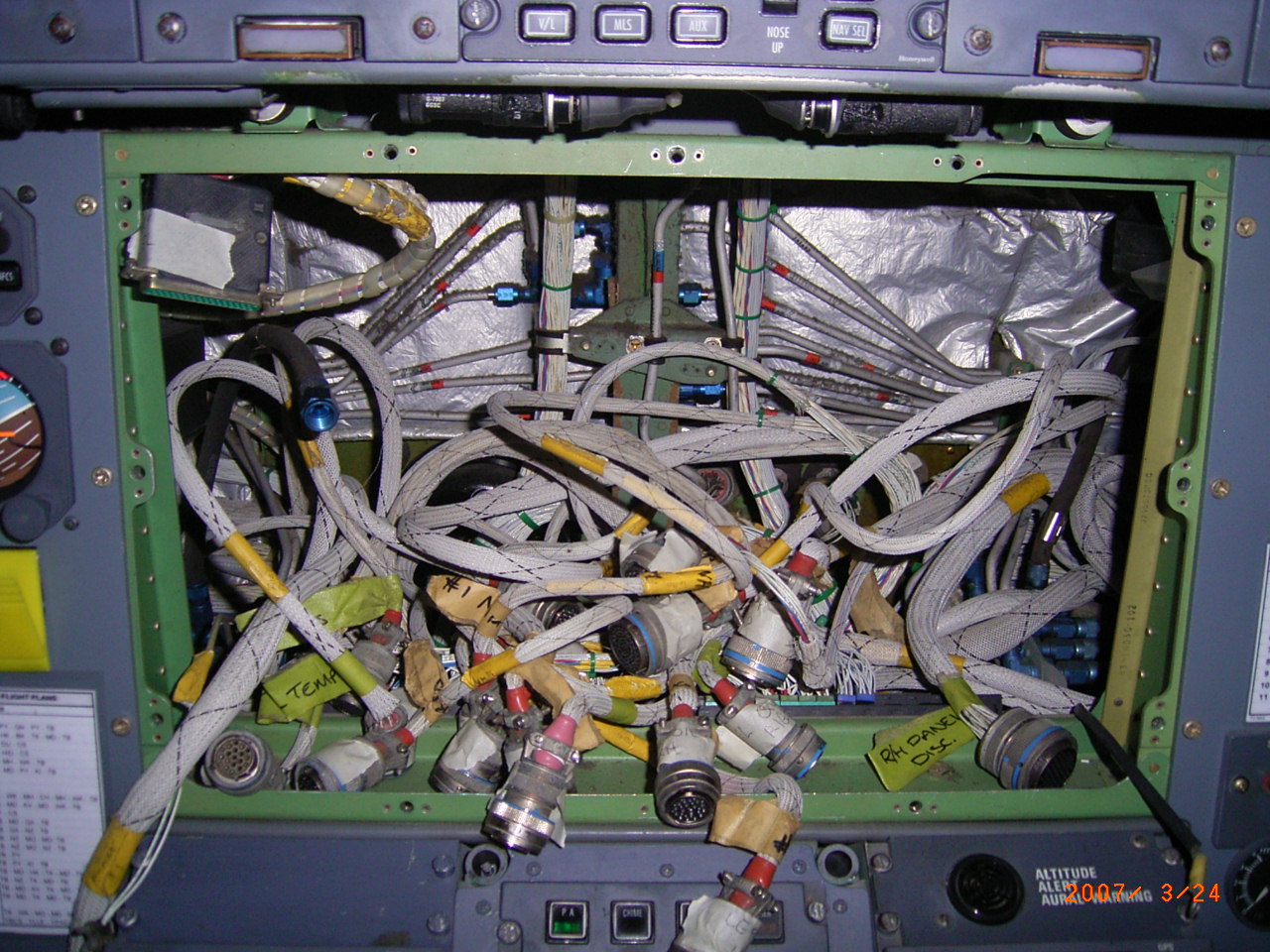
How long would it take you to find just 1 individual wire in all this???
There is a standard for marking wires which can be found in the AC43-13. This is referred to as the ATA Code.
Wire Selection
Ensuring you have the correct gauge (size) of wire is VERY VERY important. Too small a gauge of wire for the application can result in failure and possibly a fire.
A wire selection chart can be found in the FAA AC43-13 and should be used during your planning phase.
Looming
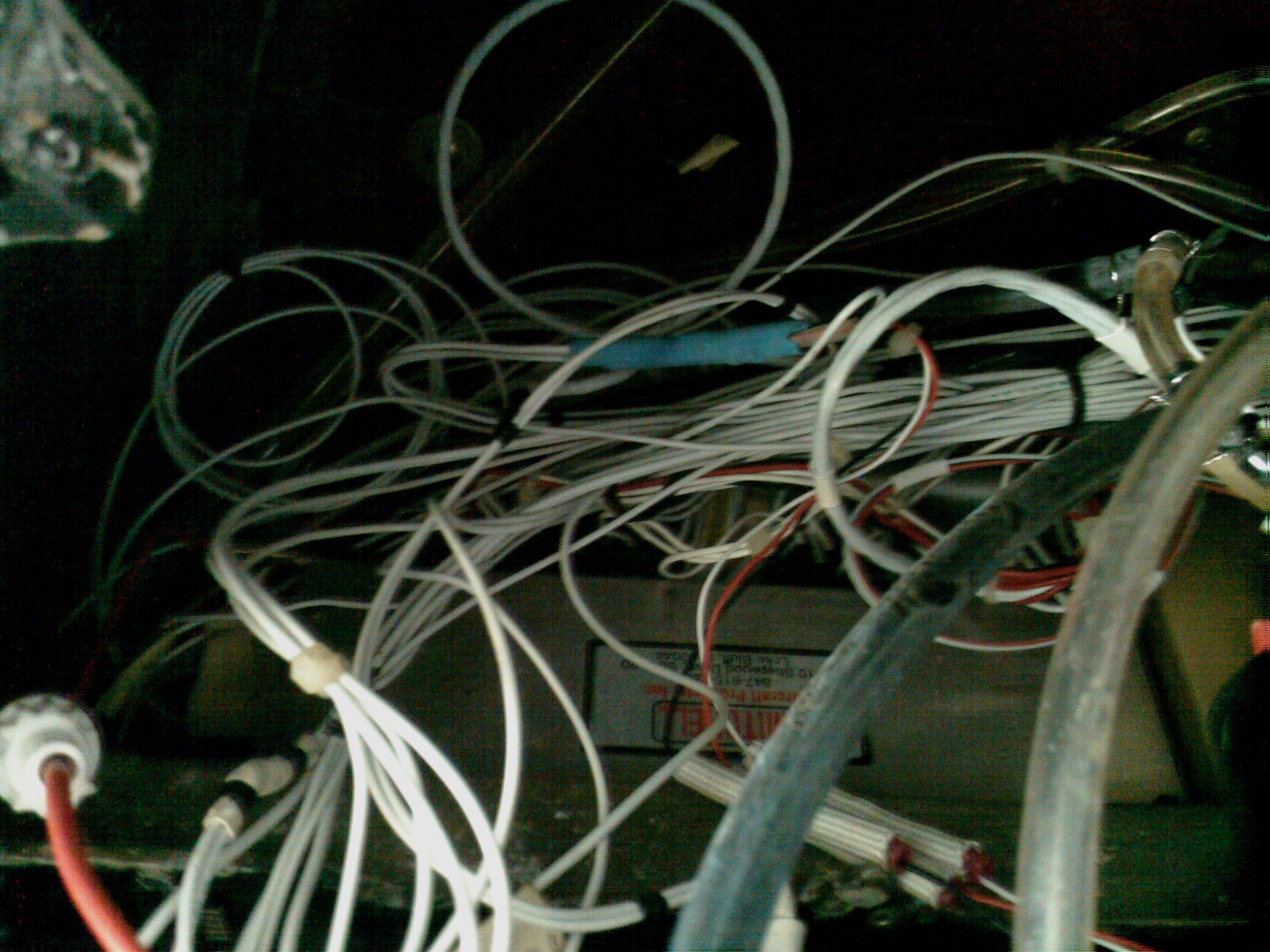
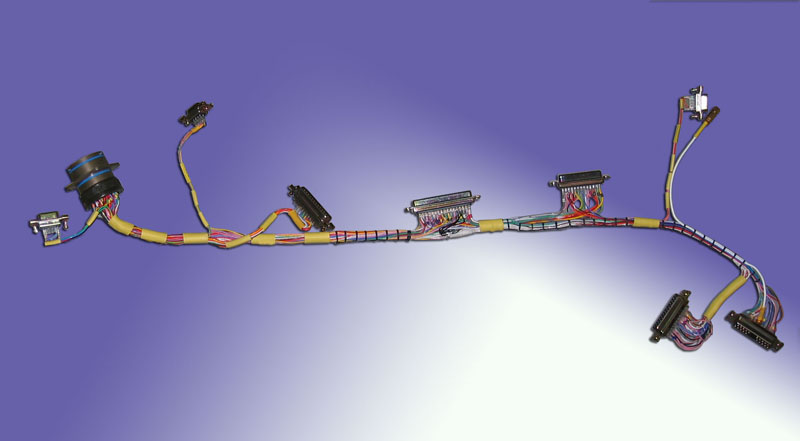
Looming is the "ART" of putting all your wires together into bundles so they are controlled and held together in groups. A well constructed loom is beautiful to observe and alot easier to work on.
How do you want behind your panel to look?
Terminating
There are many different ways to connect a wire to a component.
Here at PK Aviation we always prefer to utilize crimp connections wherever possible.
Whilst the difference between solder and crimp connections with regard to electrical characteristics is minimal, the time it takes to perform a quality solder joint verses a crimp connection is much longer. Contrary to reality, "The bigger the blob, the better the job" is not the way to solder.
Many hours of labor can be saved by a small investment in a crimp plug and the pins and sockets.
Protection
If it is not on, it is not on :-)
Particularly when a loom or wires run in an area where chaffing can occur.
The absence of protection can lead to problems.
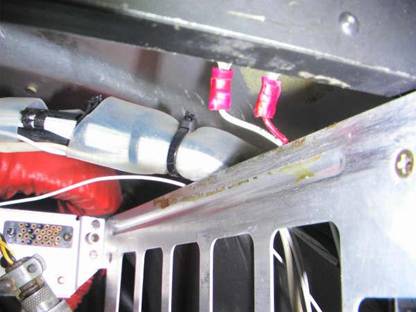
Have a look at the red and white wire above!!!
Standards
In General Aviation the standards relating to where and how to run wiring, terminate connections and almost everything you need to know to ensure your aircraft is wired correctly and safely is contained in the FAA AC43-13.
PK Aviation is available to assist home builders in all facets of panel planning and installation.